
 中文简体
中文简体 Español
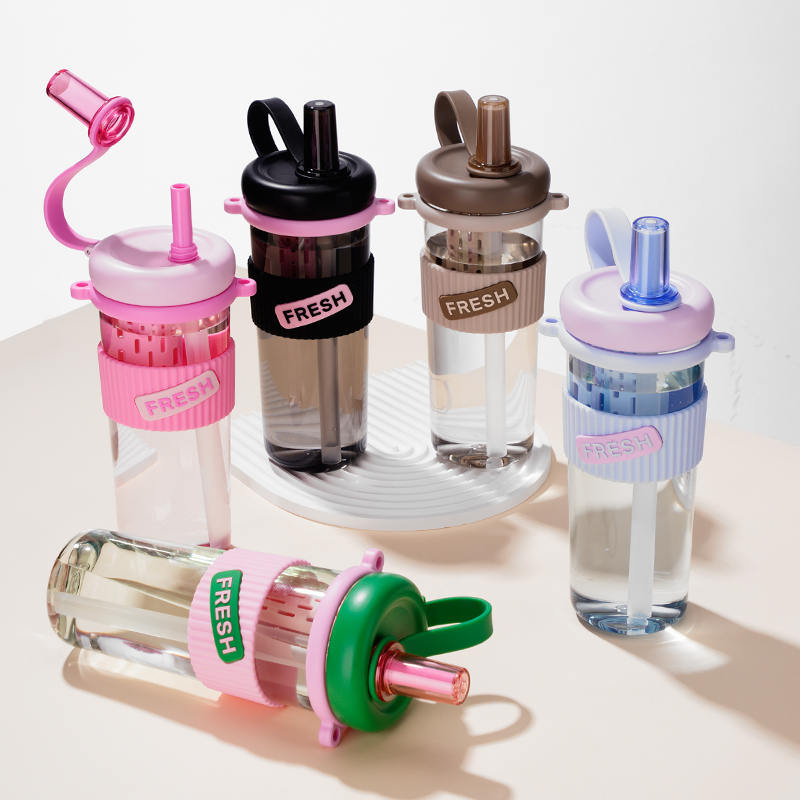
Tritan bottles have become widely used in beverage packaging due to their clarity, durability, and chemical stability. A modern Tritan copolyester is frequently applied in hydration products such as the Tritan Water Bottle and household drinkware like durable Plastic Cups. Our company has focused on evaluating how this material performs under pressure conditions, especially when used with carbonated beverages such as soda water or sparkling drinks.
1. Chemical stability supports beverage safety
- Tritan is engineered without BPA, BPS, or other bisphenol compounds, reducing concerns about chemical migration under normal usage conditions
- Laboratory testing shows no detectable estrogenic or androgenic activity under standard food-contact use scenarios
- Global food-contact approvals (FDA, NSF) support its use in drinkware applications
Our company uses this material because stability under acidic and carbonated environments is essential for consumer beverage products.
2. Pressure resistance is key for carbonation performance
- Carbonated drinks typically generate internal pressure around 60–90 psi depending on temperature and gas content
- Standard PET bottles may weaken under repeated carbonation cycles due to structural fatigue
- Tritan copolyester offers higher impact resistance and maintains structural integrity better than conventional disposable plastics
Engineering notes:
- Wall thickness used in Tritan bottles: typically 1.2–2.5 mm depending on capacity
- Deformation resistance: significantly higher than thin-walled beverage PET containers
- Drop resistance: designed to withstand repeated impact without cracking or stress whitening
These properties make Tritan suitable for short-term storage of carbonated beverages, especially in reusable drinkware systems.
3. Gas retention behavior and real-world usage limits
- Carbon dioxide molecules gradually diffuse through more plastics over time
- Tritan performs better than many general plastics but is not fully gas-impermeable
- Pressure stability is generally sufficient for daily consumption cycles rather than long-term storage
Practical observation from product testing:
- 0–24 hours: carbonation retention remains stable
- 24–72 hours: gradual loss of fizz depending on cap seal quality
- Beyond 72 hours: noticeable pressure drop in more reusable bottles
This is why our company recommends Tritan-based containers for “fresh consumption” rather than long-term soda storage.
4. Safety considerations under real usage conditions
- Safe for cold carbonated beverages under normal pressure limits
- Not recommended for fermentation or secondary gas generation (e.g., homemade brewing)
- Avoid exposure to high heat while pressurized, as thermal expansion increases internal stress
- Screw-cap sealing performance is critical for carbonation retention
Engineering insight:
- Failure mode is typically seal leakage, not material rupture
- Tritan deformation threshold remains well above typical beverage carbonation pressures
- No brittle fracture behavior under standard consumer use
5. Product design factors affecting performance
Our company integrates several structural design elements in Tritan-based drinkware:
- Reinforced bottle shoulder geometry to distribute internal pressure evenly
- Threaded cap systems with silicone sealing rings to reduce gas escape
- Anti-slip grip zones to improve handling under condensation conditions
- Transparent wall thickness control to balance clarity and mechanical strength
For Tritan Water Bottle systems, these design elements are more important than material alone in determining carbonation safety performance.
6. Comparison with common plastic alternatives
- Standard polypropylene (PP): good chemical resistance but lower rigidity under pressure cycling
- PET bottles: good for single-use carbonation but weaker for repeated reuse
- Tritan: balanced performance with higher impact resistance and better long-term clarity retention
This makes Tritan suitable for reusable systems where both durability and beverage compatibility matter.
7. Practical conclusion for carbonated drink use
- Short-term carbonation storage is safe under normal temperature and pressure conditions
- Structural performance is strong enough for daily sparkling water or soda usage
- Seal quality determines performance more than material strength in real-world cases
- Long-term storage of high-pressure carbonation is still better suited for specialized pressure-rated containers
Tritan-based drinkware continues to be widely adopted in reusable beverage markets because it combines clarity, safety certification, and mechanical strength. Our company focuses on optimizing these properties in products like Plastic Cups and bottle systems to ensure stable performance across everyday hydration and light carbonation use cases.