
 中文简体
中文简体 Español
Stainless steel is widely used in insulated drinkware due to its durability and suitability for beverage contact applications. In both daily commuting and office usage, product stability depends heavily on material performance. Within this context, Travel Mug Manufacturer and Insulated Coffee Mug Manufacturer segments continue to place attention on stainless steel quality as a core part of product development.
Material selection affects not only structural strength but also user experience during long-term use. Different grades of stainless steel are chosen according to product requirements and usage environments.
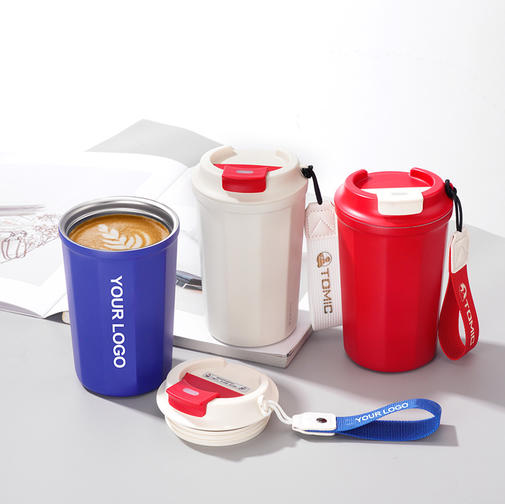
Stainless Steel Grades and Practical Applications
Common stainless steel materials include 304 and 316 types, which are used based on performance needs.
304 stainless steel is widely applied in general insulated mugs due to its balanced resistance to corrosion and suitability for daily beverage use. It provides stable performance in common environments such as offices and commuting.
316 stainless steel is selected for applications requiring higher resistance to corrosion. It is often used in products exposed to more complex conditions, where material stability becomes more important.
The selection of material grade is typically aligned with product positioning and expected usage scenarios.
Material Inspection and Processing Control
Before production begins, stainless steel materials undergo inspection to ensure consistency in composition and surface condition. This helps maintain stable quality throughout manufacturing.
Thickness consistency is also an important factor. Uniform material thickness supports stable forming during cup body production and helps reduce structural variation during later processes.
Cutting and shaping processes are carefully managed to avoid deformation. These steps contribute to stable performance in later stages such as welding, polishing, and assembly.
Influence on Thermal Insulation Performance
The insulation function of coffee mugs depends on a double-wall vacuum structure made from stainless steel. This structure reduces heat transfer and supports temperature retention during daily use.
Stable material quality helps maintain the integrity of the vacuum layer. Any inconsistency during processing may affect insulation performance and overall product stability.
The inner surface finishing also plays a role in usability. A smoother surface helps reduce residue buildup and supports easier cleaning after repeated use.
Safety Requirements and Food Contact Standards
Stainless steel used in drinkware must meet food contact safety requirements. This ensures that materials remain stable when exposed to hot or cold beverages.
Testing processes are often used to verify material safety and structural integrity. These checks help ensure that products remain suitable for daily consumption.
Welding areas and joints are also inspected to confirm structural reliability. This helps reduce potential issues related to leakage or weak points during usage.
Surface Treatment and Product Durability
Surface finishing processes improve both appearance and functional durability. Polishing methods are applied to reduce roughness and improve cleaning convenience.
Different surface styles may be used depending on product design requirements, including brushed or matte finishes. These treatments help balance visual appearance with practical handling.
Durability testing is often carried out to evaluate how surfaces perform under repeated use and cleaning conditions.
Material Quality in Manufacturing Systems
Material quality control is an important part of production systems used by Travel Mug Manufacturer and Insulated Coffee Mug Manufacturer operations. From raw material selection to final inspection, each stage contributes to overall product consistency.
Stable material performance supports compatibility with different lid designs and sealing structures. This helps ensure consistent product behavior across various usage scenarios.
Manufacturing Focus on Stability and Consistency
Production processes continue to refine material handling methods to maintain consistency across batches. This includes improvements in forming accuracy, surface treatment, and assembly coordination.
As insulated drinkware continues to be used in commuting, office, and travel environments, material stability remains an important focus in product development.
Both manufacturing categories continue to align material standards with practical usage requirements, supporting reliable performance across different product designs.